
“All the Way to America”: Gurbet and the World Beyond Gjirokastra
The story begins the morning after. A woman returns home pale and sleepless, having spent the night at a neighbor’s house for a send-off gathering. Her daughter-in-law frets over her appearance and urges her to rest. She refuses — she took a little nap sitting there, she says, and she is wide awake now. She sleepwalked home.
AUTHOR & LITERARY HISTORYTRANSLATION
Albanika Press
6/30/20264 min read
The story begins the morning after. A woman returns home pale and sleepless, having spent the night at a neighbor’s house for a send-off gathering. Her daughter-in-law frets over her appearance and urges her to rest. She refuses — she took a little nap sitting there, she says, and she is wide awake now. She sleepwalked home.
What she then recounts — the food, the songs, the jokes, the departure at dawn — is the substance of Blessings on His Journey, one of the most sustained and emotionally layered stories in Old Neno’s Stories. At its center is a single Albanian word that carries the weight of the entire piece: gurbet.
The Weight of Gurbet
Gurbet has no precise English equivalent. It refers to migration for work far from home — not a short trip, not a holiday, but an extended absence undertaken out of economic necessity, across a distance that made return uncertain. In the world Musine Kokalari depicts, gurbet was a familiar condition: men left for months or years, sending money back when they could, while women managed households, raised children, and waited.
The word appears early in the story and frames everything that follows. The gathering is described from the outset as a gurbet send-off, not a wedding. The distinction matters. A wedding is a beginning with a known shape; a gurbet departure is an opening into uncertainty, softened by ritual and song but not resolved by it.
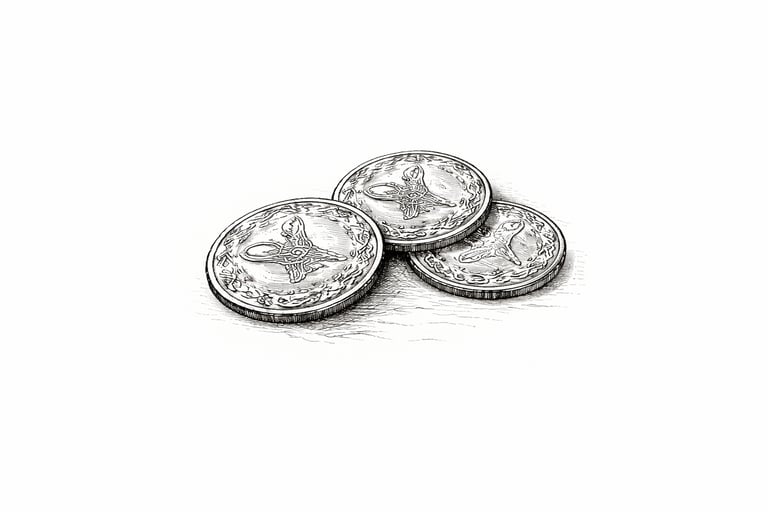
The destination is withheld until nearly the end of the story, when the narrator mentions it almost in passing: it is a long journey, the wretched one — all the way to America, they say. The phrase lands differently from gurbet. Gurbet is familiar, a known category of hardship. America is something else: a name that carries with it a vast and specific distance, a place from which the gold coins of the songs — the Mahmudiye — might eventually arrive, but from which return was far from certain. Servet’s mother worries about him catching cold at sea. He does not want to take the heavy woolen cloak.
A Night of Songs
The gathering itself moves through the night in distinct emotional registers, and the songs mark each shift. The first is light and playful — a pigeon flying to gurbet, the unmarried girls singing it with voices Aunt Xhemo loudly declares too quiet. She goads them, interrupts them, keeps a straight face through her own jokes while everyone else shakes with laughter. Her comic energy holds the grief at arm’s length just long enough for the gathering to sustain itself.
Then Aunt Xhemo turns to the wives of men already away and asks them to sing. They do not hesitate. What comes is rawer: my belly and my heart turned black since the day of gurbet; I weep by night and weep by day; I have soaked all my kerchiefs; my lord has vanished from my sight. The room that was laughing moments before absorbs this without comment. Xhemo wrinkles her nose and mutters that they are wild. The singing and dancing continue.
As dawn approaches, the third song counts down the hours by name — O Servet, the stars begin to thin, those bound for gurbet start to leave — and the fourth, sung as the horse moves away on the road, is a blessing: wherever the hoof strikes the ground, may it turn to gold and treasure. Clip, clop, the horse moves slowly. The sun strikes the mountains as they round the hill.
The Stones in the Niche
The story’s most quietly devastating moment comes after Servet has gone. His mother held herself together through the embrace, the formal blessings — may your road be smooth, may you live as long as the mountains, look at your wife and children, they live in hope of you — and the final turn at the foot of the stairs where he threw himself into her arms once more before mounting the horse.
Once he is out of sight, she breaks. She weeps until she can weep no more, vu… vu…, her tears streaming. And then, on her way back, she stops. She picks up a few small stones from where his foot last touched the ground and places them in the niche of the winter room. She says softly:
“Where my son’s foot stepped when he left, there may it step again without delay.”
It is a private gesture, almost wordless, performed after the songs have ended and the other women are dispersing. No one responds to it. The narrator reports it and moves on. Kokalari does not slow the prose or signal that something significant has just happened. The restraint is the point: this is not a performed ritual but something closer to a mother’s instinct, a small act of holding on to what has already left.
Life Resumes
The story ends as it began — in the domestic present. The narrator, having finished her account, tells her daughter-in-law to bring the knitting needles and the wool: winter is here, the blouse is not yet started, the housework must be done by lunchtime so that when visitors arrive they will find the household in order.
The transition is characteristic of Kokalari’s method throughout the collection. Grief, ritual, and the long weight of separation do not suspend ordinary life. They unfold within it. The needles come out. The wool is brought. The house must be kept ready — for the visitors who will come today, and for the son who may, one day, come home.
Throughout the story, it is the women who hold everything together: Servet’s wife moving upstairs and downstairs all night without shedding a tear; his mother composing her blessings and then, alone, placing the stones. The men travel. The women endure, manage, and remember. Blessings on His Journey is their story as much as his.
Old Neno’s Stories — the first English translation of Musine Kokalari’s work — is available now:
📖 Barnes & Noble: https://www.barnesandnoble.com/w/old-nenos-stories-musine-kokalari/1149899284
📖 Amazon: https://www.amazon.com/Old-Nenos-Stories-Selected-Literature/dp/B0GYGKL94G

Albanika Press
Independent publisher of thoughtful books.
Phone: +1-202-854-0140
Email: inquiries@albanika.com
© 2026 Albanika Press. All rights reserved.
Imprints:
Mesagjeritë Shqiptare — Translation & Cultural Preservation
Slim Shady — Illustrated Books & Series for Children