What It Means to Translate a Voice
To translate a voice in Musine Kokalari's prose means preserving the oral cadence and cultural texture of a vanished world — without smoothing it into something else.
TRANSLATION
Albanika Press
5/11/20264 min read
What It Means to Translate a Voice
Translation is often described as a problem of equivalence — finding the right word in one language to match the right word in another. But some texts resist that framing entirely. Musine Kokalari's prose is one of them.
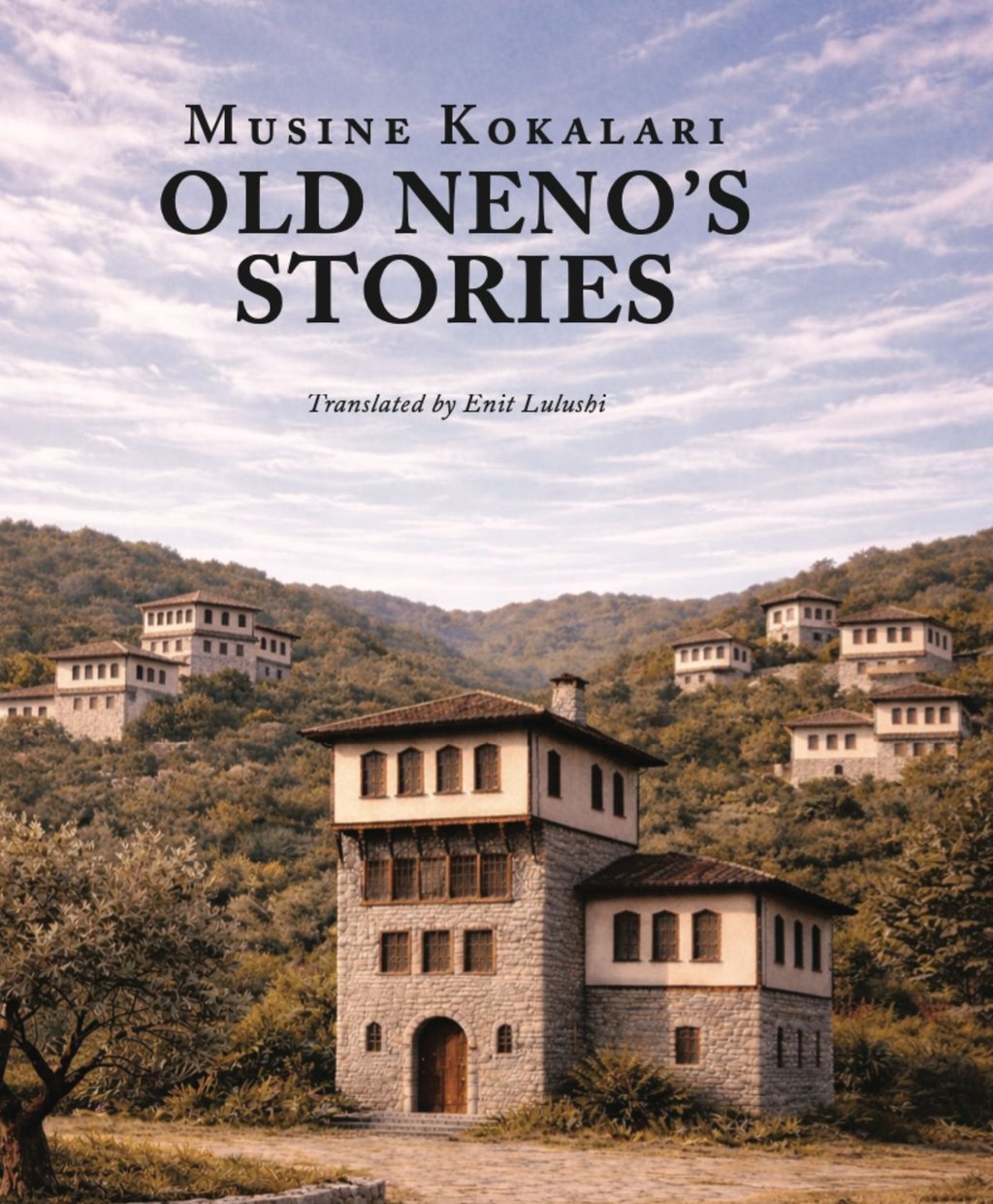
The stories gathered in Old Neno's Stories are not primarily written texts that happen to contain dialogue. They are transcriptions of a speaking voice — the voice of Old Neno, an elderly woman from Gjirokastër whose speech carries the full weight of a community's moral vocabulary. To translate these stories is not to find equivalents. It is to carry a voice across languages while keeping it alive.
That is a different task. And it requires different principles.
Preserving Cadence Over Correctness
The first principle governing this translation is that spoken rhythm takes precedence over grammatical tidiness. Kokalari's Albanian builds emotional momentum through repetition, accumulative phrasing, and sudden turns — from anger to resignation, from outrage to dark humor, sometimes within a single sentence. In English, the instinct is often to smooth these structures out, to divide long cascading clauses into shorter, cleaner sentences. That instinct was resisted at every turn.
When Old Neno speaks, she speaks in the way that people actually speak — not in the way that edited prose is supposed to read. Preserving that quality in English sometimes means allowing a sentence to run longer than a copy editor might prefer, or allowing a repetition to stand where a synonym might have been substituted. The goal was always the cadence of speech, not the polish of the page.
Keeping the Figurative Language Intact
Kokalari's prose is rich in bodily imagery and dramatic exaggeration. Anger rises to the head. Shame is eaten with bread. Suffering cracks the lips. A household collapses or turns upside down. These expressions are not literary ornaments — they are the emotional shorthand of everyday Albanian speech, functioning within a shared cultural vocabulary that her original readers would have recognized instantly.
The translation preserves these metaphors directly rather than replacing them with more familiar English idioms. This is a deliberate choice. Substituting a known English expression for an Albanian one might make the text feel more immediately accessible, but it would also make it feel more generic — as though the stories could have been set anywhere, told by anyone. The strangeness of some of these expressions in English is not a flaw to be corrected. It is information about the world in which these stories live.
Blessings, Curses, and the Incantatory Voice
Blessings and curses play a structural role in Kokalari's stories. They appear at moments of strong emotion — anger, grief, affection, moral judgment — and they follow formal patterns that carry their own rhythm and force. Phrases such as "may your days be cut short," "may he live as long as the mountains," and "on my father's head" are not simply colorful expressions. They reflect traditional modes of speech in which religious invocation, exaggeration, and moral commentary intertwine.
These formulas were preserved in their full structure rather than condensed into modern English equivalents. A curse rendered as "drop dead" loses the incantatory quality of the original — the sense that the speaker is calling on something larger than herself to deliver judgment. The formal structure is part of the meaning.
What Was Left Untranslated — and Why
Several words in Old Neno's Stories appear in their original Albanian form without English translation. Words such as gurbet (migration for work far from home), sufra (a low dining spread used for communal meals), llokum (a traditional sweet), and shalvars (loose traditional trousers) have no precise English equivalents that carry the same social and cultural meaning. Translating them would mean losing something essential — the specific texture of the world these stories inhabit.
These words appear naturally within the narrative and are not glossed or explained at length. The translation trusts readers to infer meaning from context, as they would when encountering any unfamiliar word in any well-written book. The presence of these untranslated terms is not an obstacle to understanding — it is part of the experience of reading across cultures.
Sound as Meaning
Kokalari's prose includes a range of sound expressions and vocal interjections that form part of the emotional and performative character of the storytelling voice. Expressions such as U!, pu-pu, trak, fiu, bram, and verc verc mimic gestures, reactions, and small moments of physical action. They cannot be directly translated because they are not words in the conventional sense — they are sounds that carry feeling.
These expressions were preserved in their original form throughout the translation. They are meant to be heard as much as understood, and their presence in an English text contributes to the sense that the reader is overhearing a conversation rather than reading polished literary narration. Replacing them with English approximations would have sanitized something essential.
The Standard Applied Throughout
Every translation decision in Old Neno's Stories was guided by a single question: does this choice preserve the function and force of the original, or does it substitute something more comfortable in its place? Where comfort and fidelity were in tension, fidelity won.
The result is a translation that may occasionally feel unfamiliar to readers accustomed to smoothly domesticated world literature. That unfamiliarity is intentional. Kokalari's world is not our world. Her language is not our language. The translation invites readers into that distance rather than erasing it — because the distance itself is part of what makes these stories worth reading.
Old Neno's Stories is available in hardcover, paperback, and ebook formats. Purchase here →
Albanika Press
Independent publisher of thoughtful books.
Phone: +1-202-854-0140
Email: inquiries@albanika.com
© 2026 Albanika Press. All rights reserved.
Imprints:
Mesagjeritë Shqiptare — Translation & Cultural Preservation
Slim Shady — Illustrated Books & Series for Children